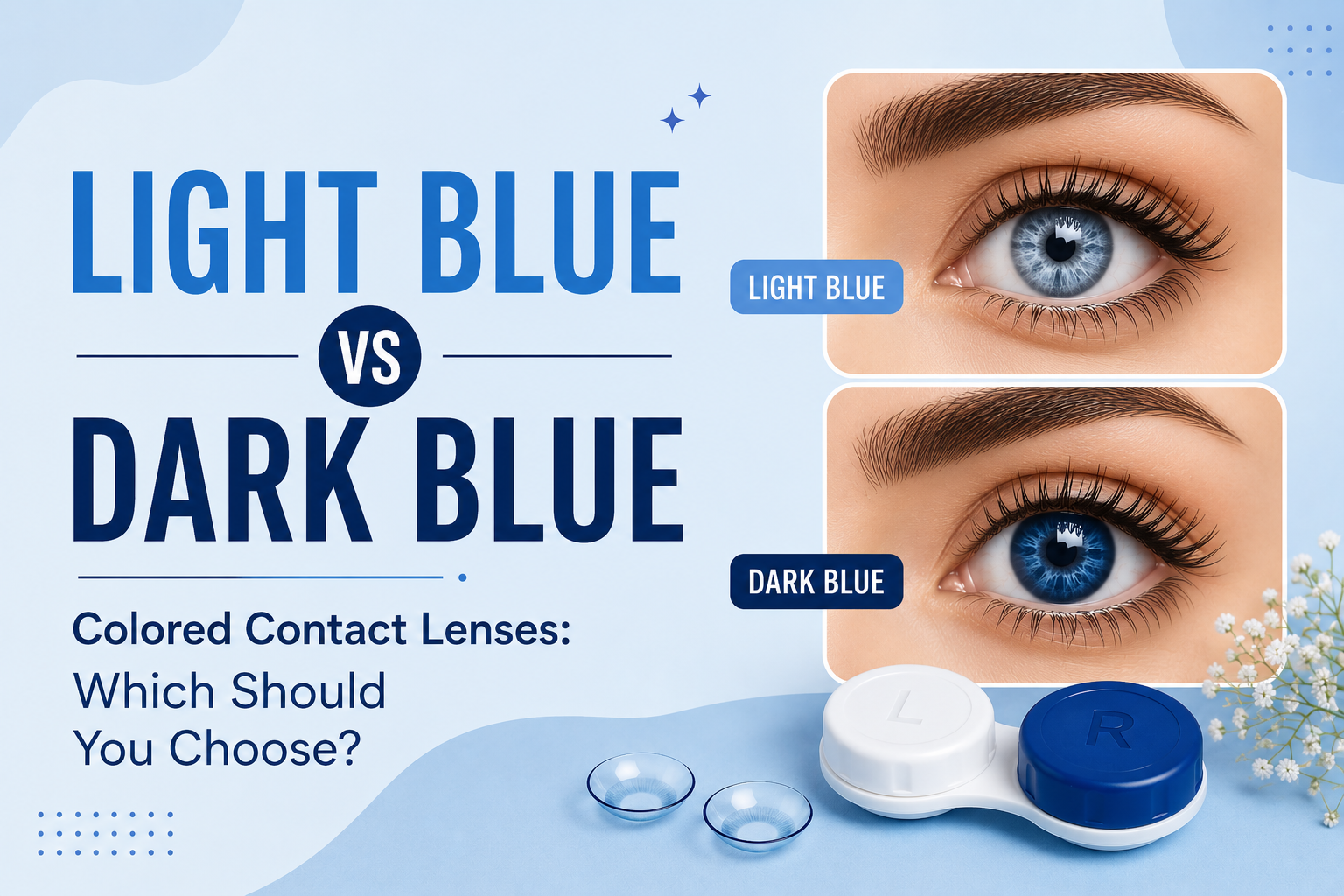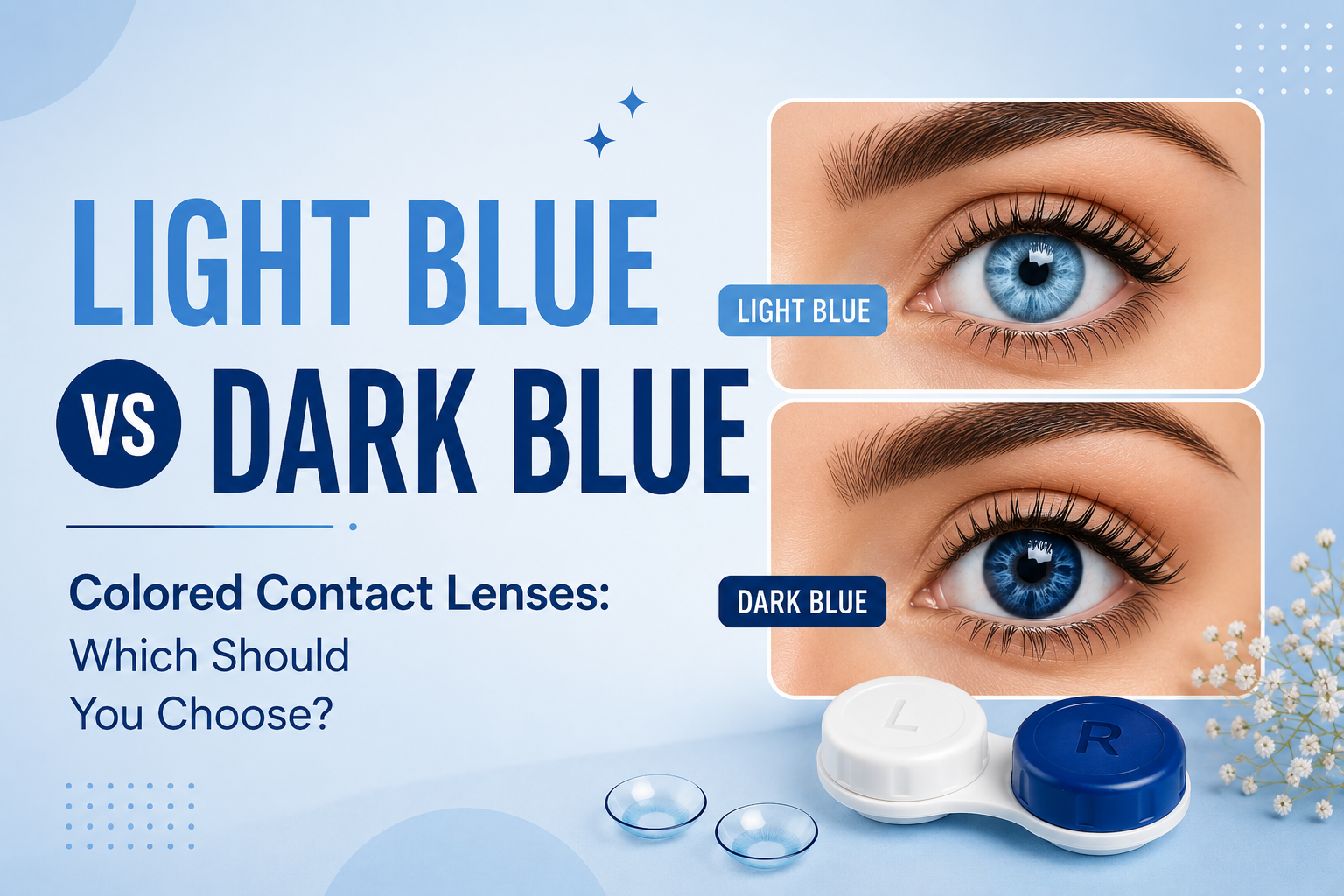
Blue Colored Contact Lenses can change the appearance of your eyes subtly or dramatically, depending on the shade, opacity, pattern, and design you choose. From soft ocean blue to icy blue and deeper navy tones, there are plenty of options available for different looks and occasions.
But choosing blue contacts based on appearance alone can lead to disappointing results. A shade that looks striking in a product photo may appear completely different once it is placed over your natural iris. Comfort, lens specifications, replacement schedules, and proper care are equally important considerations.
Whether you are exploring blue contacts for the first time or already wear colored lenses, understanding the most common buying mistakes can help you make a more informed choice.
Below are seven mistakes worth avoiding when choosing your next pair.
1. Choosing Blue Contacts Based Only on the Product Photo
Blue Colored Contact Lenses can look different from one person to another, so relying entirely on a product image is one of the easiest mistakes to make.
Product photographs are useful references, but they cannot guarantee exactly how a particular shade will appear on your eyes. Lighting conditions, camera settings, editing, natural iris color, and even skin tone can influence how blue lenses look.
A pale blue lens, for example, may appear bright and noticeable over light-colored eyes but more muted over dark brown eyes. Similarly, highly opaque lenses may create a stronger transformation than semi-transparent designs.
Before choosing a lens, consider:
- Your natural eye color
- The opacity of the lens
- The iris pattern
- Whether the design has a limbal ring
- The lighting in which you will usually wear the lenses
Where available, look at customer photos or examples of the lenses worn over different natural eye colors. These can provide additional context beyond studio photography.
The goal is not to find a lens that looks perfect in isolation, but one whose design is suitable for the effect you want to create.
2. Ignoring Your Natural Eye Color
Your natural iris color plays a major role in determining the final appearance of blue contact lenses.
Someone with light grey or green eyes may get noticeable results from a relatively translucent blue lens. Dark brown eyes, however, generally require greater opacity if the aim is to create a clearly visible blue appearance.
This is why two people wearing the same lenses can end up with noticeably different results.
If you have darker eyes, look carefully at the lens pattern and opacity rather than simply choosing the lightest blue available. Some designs combine blue pigments with grey, darker outer rings, or layered patterns to create greater visual definition.
For lighter eyes, softer or more transparent blue designs may allow some of the natural iris pattern to remain visible.
It can also help to understand the difference between a subtle enhancement and a full color transformation.
If your goal is a natural-looking result, blending with your existing iris may matter more than choosing the brightest possible shade.
3. Buying the Wrong Lens Diameter or Specifications
Blue Colored Contact Lenses should not be selected by color alone. Lens specifications can affect how a lens fits and how it appears on the eye.
You may encounter specifications such as:
- Diameter (DIA)
- Base curve (BC)
- Water content
- Replacement period
- Lens material
- Prescription power, where applicable
Diameter is particularly relevant to the visual effect. Some colored lenses are designed to stay relatively close to the natural iris size, while others can create a more enlarged appearance.
A larger diameter does not automatically mean a better or more attractive result.
Base curve is another specification that should not be overlooked. It relates to the curvature of the lens and is one of the factors involved in lens fit.
Contact lenses are medical devices, so fit and suitability matter beyond aesthetics. If you are unsure which specifications are appropriate for your eyes, consult an eye-care professional rather than guessing based on another person's lens measurements.
4. Picking the Wrong Shade of Blue for the Look You Want
Not every blue creates the same effect.
Blue colored contacts are available in a wide range of tones, including icy blue, aqua, ocean blue, grey-blue, turquoise, deep blue, and other blended shades.
One common mistake is choosing a shade because it looks attractive on its own without considering the overall look you want.
For example, a bright icy shade may create a more noticeable transformation, while a softer grey-blue may appear more understated depending on your natural iris.
Think about where and how you plan to wear your lenses.
For an everyday appearance, you may prefer:
- Softer blue tones
- Fine iris detailing
- Gradual color transitions
- Less prominent outer rings
For photography, cosplay, themed outfits, or more dramatic styling, stronger pigmentation or contrasting patterns may be more appropriate.
You can explore different blue contact lens styles to understand how shades, patterns, and designs vary before deciding what type of blue appearance you prefer.
Rather than asking, "Which blue is best?", ask, "What type of result am I trying to achieve?"
That question usually makes comparison much easier.
5. Forgetting About Comfort and Wear Time
A beautiful color will not compensate for an uncomfortable lens.
When buying blue eye contacts, people sometimes focus so heavily on the shade that they overlook material, fit, replacement schedule, and recommended wear practices.
Comfort can vary between wearers because everyone's eyes are different. Environmental conditions can also affect the wearing experience. Long periods in air-conditioned rooms, extended screen use, dry environments, and improper lens care may contribute to discomfort.
Never assume that because a lens feels comfortable initially, it can be worn indefinitely.
Follow the manufacturer's wearing instructions and the advice provided by your eye-care professional. Do not sleep in lenses unless the specific lenses are approved for overnight wear and your eye-care professional has advised you accordingly.
If your eyes become painful, unusually red, irritated, or your vision changes while wearing contacts, remove the lenses and seek appropriate professional advice.
Comfort should always be treated as an important part of choosing contacts rather than an afterthought.
6. Not Checking the Replacement Schedule Before Buying
Blue Colored Contact Lenses are available with different replacement schedules, and misunderstanding them can lead to improper use.
Depending on the product, you may encounter daily disposable, monthly, yearly, or other replacement formats. The appropriate choice depends partly on how frequently you expect to wear your lenses and the replacement schedule specified for that particular product.
Daily disposables can be convenient for occasional wear because you start with a fresh pair each time according to the prescribed schedule. Reusable lenses, on the other hand, require appropriate cleaning, handling, storage, and timely replacement.
Most importantly, a "yearly" or another extended replacement period does not mean the lenses can be worn continuously for that entire period.
If you are unsure how different replacement schedules work, read this guide on how often you should replace blue colored contact lenses before choosing between daily and reusable options.
Knowing the replacement schedule before purchasing can help you choose a format that better matches your routine and willingness to maintain reusable lenses properly.
7. Treating Colored Contacts Like Regular Fashion Accessories
Perhaps the most serious mistake is treating colored contact lenses in the same way you would treat sunglasses, jewelry, or another fashion accessory.
Even when worn purely for cosmetic purposes, contact lenses sit directly on the eye and need appropriate handling and hygiene.
Basic precautions include washing and drying your hands before handling lenses, using appropriate contact lens solution where required, keeping reusable lens cases clean, and avoiding contact between lenses and non-sterile water.
Never share colored contacts with another person.
You should also avoid using saliva or tap water to clean or store lenses. Products that are not designed for contact lens care should not be used as substitutes for proper lens solutions.
If you are new to contacts, learning correct insertion, removal, cleaning, and storage practices before regular use is worthwhile.
An eye-care professional can also help determine whether contact lenses are suitable for your eyes and provide guidance on safe wear.
How to Choose Blue Colored Contact Lenses More Carefully
Choosing Blue Colored Contact Lenses becomes easier when you separate appearance from practical requirements.
Start with suitability and fit. Once you know which lens specifications are appropriate for your eyes, you can compare colors and designs within those parameters.
Next, decide what visual effect you want. Do you want your natural iris to remain visible? Are you looking for a noticeable transformation? Do you prefer a defined outer ring or a softer transition?
Then consider your wearing habits.
Someone who wears colored contacts only occasionally may have different priorities from someone who intends to use them more regularly. Replacement schedule, cleaning requirements, storage, and general maintenance should therefore be considered before purchasing.
Finally, avoid assuming that the same lens will look identical on everyone. Natural eye color and iris patterns can substantially change the final result.
A little research before buying can prevent many of the common problems associated with choosing colored contacts based purely on appearance.
Wrapping Up
Blue Colored Contact Lenses offer plenty of possibilities, from subtle color enhancement to a noticeably different eye look. The key is to look beyond the shade itself.
Natural eye color, opacity, diameter, base curve, lens design, replacement schedule, and care requirements can all influence your experience with blue contacts.
Avoid choosing lenses solely because they look attractive in a photograph or because a particular style looks good on someone else. Instead, consider how the design may interact with your own eyes and whether the lens specifications and replacement format are appropriate for you.
Most importantly, remember that colored contacts require the same attention to eye health, hygiene, and proper handling as other contact lenses.
Making an informed choice can help you find the blue look you want without overlooking the practical factors that matter.
Frequently Asked Questions
1. How do I choose the right blue contact lenses?
Consider your natural eye color, desired effect, lens opacity, diameter, base curve, prescription requirements, replacement schedule, and care instructions. An eye-care professional can help determine the appropriate fit and specifications for your eyes.
2. Can blue contact lenses look natural?
Yes, natural-looking blue contacts typically feature detailed iris patterns, blended shades, gradual color transitions, and subtle limbal rings. How natural they appear also depends on how the lens blends with your original iris color.
3. Can you sleep in blue colored contact lenses?
You should not sleep in colored contacts unless the particular lenses are specifically approved for overnight wear and your eye-care professional has advised you that doing so is appropriate.
4. How do I know what size colored contacts to buy?
Contact lens size involves specifications such as diameter and base curve. These should not be selected solely according to the visual effect you want. An eye-care professional can determine which contact lens measurements and fit are appropriate for your eyes.