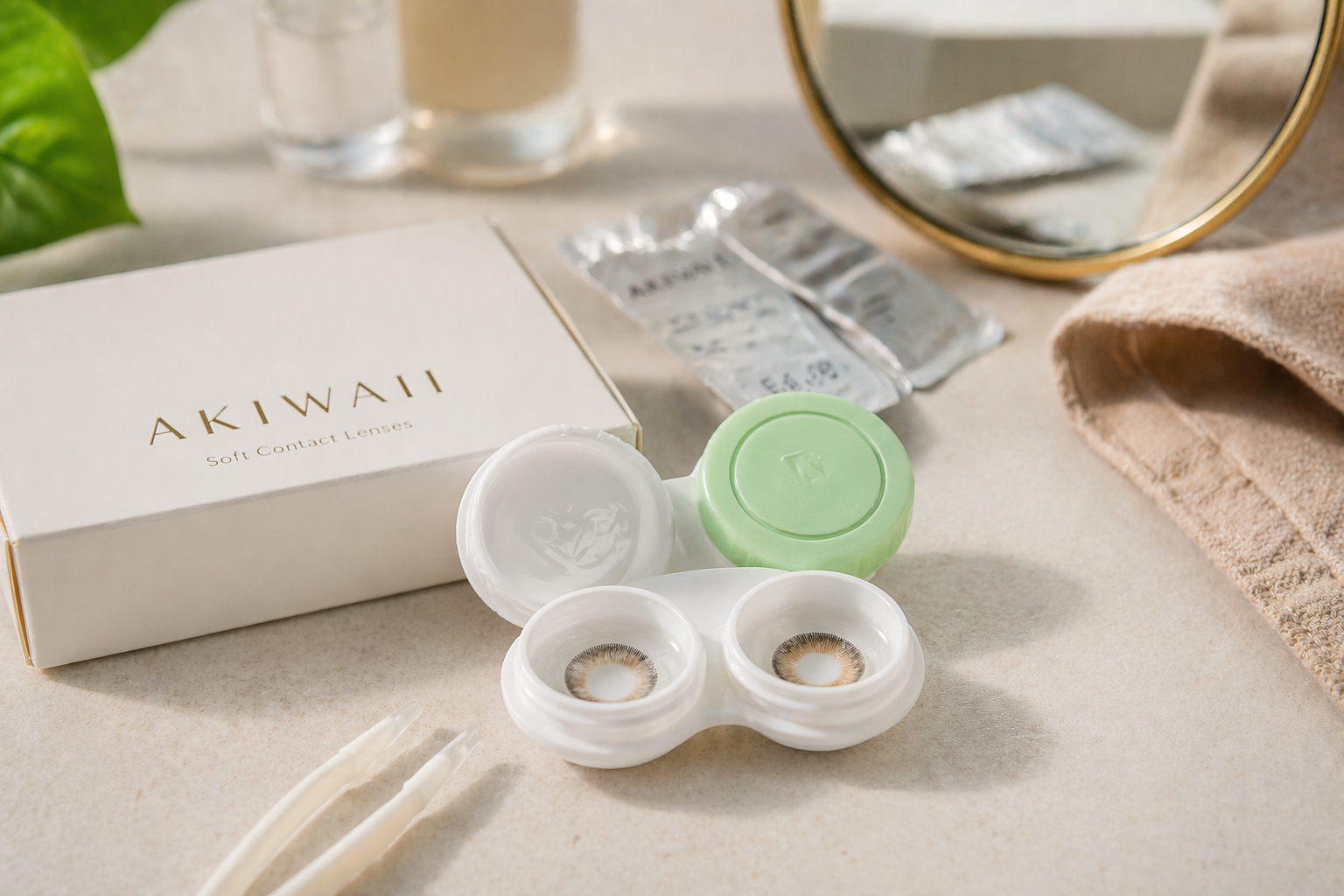
Blue Colored Contact Lenses can completely change how your eyes look, but choosing a pair should involve more than simply finding a shade you like. Two lenses that appear almost identical in product photos can look noticeably different once worn because your natural eye color, iris pattern, lens diameter, opacity, and even lighting influence the final result.
There is also the practical side of wearing contacts. Fit, prescription requirements, replacement schedules, materials, hygiene, and proper care matter just as much as appearance.
So, before choosing blue contacts based on a photo or color name alone, it helps to ask a few important questions. The answers can help you narrow down your options and choose lenses that suit both the look you want and your individual eye-care requirements.
1. What Shade of Blue Will Suit My Natural Eye Color?
Blue Colored Contact Lenses do not produce the same result on every person. Your natural iris color acts as the base underneath the lens, which means the final appearance can vary considerably.
Someone with naturally light eyes may find that a translucent icy or aqua blue creates a noticeable change without looking overly dramatic. Dark brown eyes, however, may require a more opaque design if the goal is to achieve a clearly visible blue appearance.
It is therefore worth thinking beyond labels such as "light blue" or "dark blue."
Common blue contact lens shades include:
- Ice blue
- Aqua blue
- Sky blue
- Ocean blue
- Deep blue
- Blue-grey
- Turquoise
- Navy blue
Before choosing, look at photographs of the lenses on people with an eye color similar to yours whenever those images are available.
2. Do I Want a Natural or Dramatic Effect?
The next question is surprisingly important: how noticeable do you actually want your lenses to be?
Natural-looking blue contacts often use detailed iris patterns, softer transitions and blended colors. Rather than covering the eye with one solid blue tone, the design attempts to imitate the variations found in a natural iris.
Dramatic lenses take a different approach. They may feature brighter pigmentation, stronger limbal rings, unusual patterns, or greater enlargement.
Neither option is automatically better.
A natural blue may work well if you want a subtle change for everyday styling. A brighter blue might be preferable for photography, cosplay, themed makeup, or occasions where you intentionally want your eyes to attract attention.
Deciding this before browsing can save considerable time by immediately narrowing the types of designs you should consider.
3. Will the Blue Show Up on Dark Eyes?
If you have brown or very dark eyes, this should be one of your first questions.
Some colored lenses are designed primarily to enhance an existing light eye color. Others contain enough pigmentation to produce a noticeable transformation over darker irises.
The pattern matters too.
A blue lens with significant transparent areas may allow much of your natural brown iris to remain visible. This can create an attractive blended effect, but it may not produce the clear blue transformation you expected.
More opaque blue contacts usually provide greater color coverage.
However, opacity alone does not determine whether a lens will look natural. The placement of the pigment, pupil opening, outer ring, and iris detailing all contribute to the final appearance.
When possible, review close-up wear photos rather than relying entirely on isolated product images.
4. What Diameter and Base Curve Do I Need?
Color tends to receive the most attention when people shop for cosmetic contacts, but lens measurements should not be overlooked.
Two specifications you are likely to encounter are diameter (DIA) and base curve (BC).
Diameter refers to the overall width of the contact lens, generally measured in millimetres. It can influence both fit and appearance. Some larger designs can create a more noticeable enlarging effect.
Base curve describes the curvature of the lens.
These aren't simply styling numbers. Contact lenses sit directly on the eye, so appropriate fit matters.
For example, some blue contact lenses currently listed on Akiwaii specify a 14.5 mm diameter and 8.5 mm base curve. That does not mean those measurements are automatically suitable for everyone. Your eye-care professional can advise you about appropriate contact lens measurements and fit.
5. Do I Need Prescription or Plano Blue Contacts?
Blue Colored Contact Lenses can be available with corrective power or without vision correction.
Non-corrective colored contacts are often described as Plano or 0.00 lenses.
If you already wear prescription contacts, don't assume that your eyeglass prescription can simply be copied when purchasing colored lenses. Contact lens prescriptions contain information specifically related to lenses worn directly on the eyes.
Your requirements can also differ between your left and right eye.
If you are unsure about your prescription or have never worn contacts before, an eye examination and professional fitting are sensible steps before purchasing.
Cosmetic lenses may be worn for appearance, but they are still contact lenses.
6. What Is the Replacement Schedule?
Not all blue contacts are designed to be used for the same length of time.
Depending on the product, you may encounter daily disposable, monthly, longer replacement schedules, or other wearing formats. Akiwaii's current range, for example, includes both daily and yearly blue lens options.
The right choice depends partly on how frequently you expect to wear your lenses and the schedule recommended for the specific product.
Daily disposables can be convenient for occasional wear because a fresh pair is used according to its prescribed schedule. Reusable lenses require consistent cleaning, storage, and replacement.
Most importantly, "yearly" or another replacement period does not mean a lens can be worn continuously for that entire period. Replacement schedule and daily wearing time are different things.
Always follow the manufacturer's instructions and guidance from your eye-care professional.
7. What Material and Water Content Does the Lens Have?
Appearance may get you interested in a particular design, but lens specifications deserve attention too.
Product pages can include information such as lens material and water content. Water content describes the percentage of water within a soft contact lens material.
You might assume that a higher percentage automatically means greater comfort, but contact lens comfort is more complicated than a single number. Lens material, fit, tear film, wearing environment, and your individual eyes can all affect how a lens feels.
For reference, different blue lenses can have different specifications. Akiwaii's Pure Blue page currently lists 40% water content, while Rivah Blue lists 38%.
Instead of choosing based on the highest number, consider the full lens specification and professional advice.
8. How Should I Clean and Store Reusable Blue Contacts?
Reusable blue colored contacts require proper care.
Before handling lenses, wash and thoroughly dry your hands. Follow the recommended cleaning and disinfecting procedure for your specific lenses and solution.
Avoid treating contact lens solution as something that can simply be topped up indefinitely in the case. Reusable lenses need appropriate cleaning and fresh solution according to their care instructions.
You should also avoid exposing lenses to water unless specifically directed otherwise by an eye-care professional. That includes activities such as swimming or showering while wearing contacts.
Your lens case also requires regular care and replacement.
Good contact lens hygiene isn't an optional extra. It is part of wearing contacts responsibly.
9. Can I Judge the Color From Product Photos Alone?
Not completely. Product images are useful, but they should be treated as a reference rather than a guarantee of exactly how a particular shade will appear on you.
Several factors can change the perceived color:
- Your original iris color
- Indoor versus outdoor lighting
- Camera exposure
- Makeup
- Skin undertone
- Lens opacity
- Pupil size
- Iris pattern
A bright blue lens photographed under studio lighting may look softer indoors. Similarly, a blue-grey lens may appear more blue on one person and more grey on another.
If available, look for several types of visual references: close-up eye photographs, before-and-after images, and photos showing the lenses under more natural lighting.
10. Does the Lens Have a Limbal Ring?
A limbal ring is the darker border around the iris.
Some blue lenses deliberately emphasize this ring to make the iris look more defined. Others use little or no visible outer ring to create a softer transition between the iris and the white of the eye.
A strong limbal ring can produce a larger, sharper, or more doll-like appearance.
A subtle ring often creates a softer result.
Neither design is universally more realistic. Your natural features and the particular lens pattern determine how the effect comes together.
When comparing different blue eye contacts, pay attention to the outer edge as well as the central color.
11. How Will the Lens Blend Around My Pupil?
This is one detail people frequently overlook.
Colored contacts generally leave an opening around the pupil so that you can see through the lens. Because of this, some of your natural iris color may remain visible near the centre.
That can create an attractive gradient. For example, brown around the pupil transitioning into blue can sometimes create a hazel-blue or dimensional appearance.
With other designs, the transition may be sharper.
If your goal is natural-looking blue eyes, inspect the inner pattern carefully. Fine radial lines and gradual color transitions can create a very different result from a solid block of blue.
12. Am I Buying From a Source That Provides Clear Lens Information?
Before buying any colored contacts, check how much useful information is actually available.
A product page should help you understand what you are considering rather than making you depend solely on attractive photographs.
Look for details such as:
- Lens diameter
- Base curve
- Water content
- Available prescription powers
- Replacement schedule
- Wearing and care instructions
- Shipping and return information
For example, individual Akiwaii product pages provide lens specifications alongside wearing and care information for shoppers to review.
Clear specifications make it easier to compare different designs on factors beyond color.
13. What Should I Do If the Lenses Feel Uncomfortable?
Never assume discomfort is simply something you need to "get used to."
If your lenses cause persistent pain, significant redness, unusual watering, blurred vision, light sensitivity or other concerning symptoms, remove them and seek advice from a qualified eye-care professional.
A lens that looks perfect isn't worth ignoring signs that your eyes are unhappy.
New wearers should be particularly careful to follow insertion, removal, and hygiene instructions, rather than extending wear simply because the lenses still appear fine.
Comfort and eye health should always take priority over appearance.
Wrapping Up: Choose Blue Contacts Beyond the Color
Blue Colored Contact Lenses can create anything from a barely noticeable enhancement to a dramatic change in appearance, but color is only one part of choosing a suitable pair.
Ask yourself what shade you want, how the design will interact with your natural eye color, whether you prefer subtle or bold results, what replacement schedule suits your needs, and whether the specifications are appropriate for you.
Most importantly, treat colored contacts as contact lenses first and fashion accessories second. Proper fit, hygiene, care, and professional eye-care advice are essential parts of responsible wear.
Once those practical questions are answered, choosing between ice blue, ocean blue, blue-grey, or another shade becomes much easier and far more informed.
Frequently Asked Questions
1. Are blue colored contact lenses safe for your eyes?
Blue colored contact lenses can be worn safely when they are properly fitted, handled hygienically, and used according to their instructions. An eye-care professional can help determine whether a particular type of contact lens is appropriate for your eyes.
2. Do I need a prescription for blue colored contact lenses?
Prescription requirements depend on where you live and the type of lenses you need. Even if you don't require vision correction, colored contacts still sit directly on the eyes, so professional fitting and eye-care guidance are important.
3. Can you sleep with blue colored contact lenses?
You should not sleep in colored contact lenses unless the specific lenses are approved for overnight wear and an eye-care professional has advised you to do so. Follow the wearing instructions provided for your lenses.
4. What should I check before buying blue colored contact lenses online?
Check the prescription options, base curve, diameter, lens material, water content, replacement schedule, care requirements, and available product information. Appearance should be only one factor in your decision.
Ready to Build Your 5-Shade Wardrobe?
Choose any 5 eligible regular-price Yearly, Monthly, or 6-Month pairs. Mix across wear periods and pay $55 total.
Eligible full-price styles only. One-time purchase—no subscription.
-.png?w=2000&h=1500)