Why Hazel Contact Lenses Are Popular for Brown Eyes
Hazel lenses enhance brown eyes without creating harsh contrast.
Brown eyes already have depth and richness. The goal for many users is not to completely change that color but to enhance it. This is where hazel lenses stand out.
How Hazel Tones Blend with Natural Brown Eye Color
Hazel is not a single color. It is a mix of green, brown, and golden tones. When applied over brown eyes, these tones blend naturally instead of sitting on top like a layer. This creates a soft transition rather than a dramatic shift.
When you wear hazel contact lenses on brown eyes, the result feels more like a natural variation of your own eye color. It adds light and dimension without removing the original depth.
The Unique Mix of Green and Brown in Hazel Lenses
The subtle green tones lift the darkness of brown eyes. At the same time, the brown and amber elements keep the look grounded and realistic. This balance makes hazel lenses highly adaptable across different eye shades.
Why Hazel Looks More Natural Than Other Colors
Unlike blue or grey lenses, hazel does not create strong contrast. High contrast often looks artificial, especially on darker eyes. Hazel avoids that by staying within a natural color range.
How Hazel Contact Lenses Look on Brown Eyes in Real Life
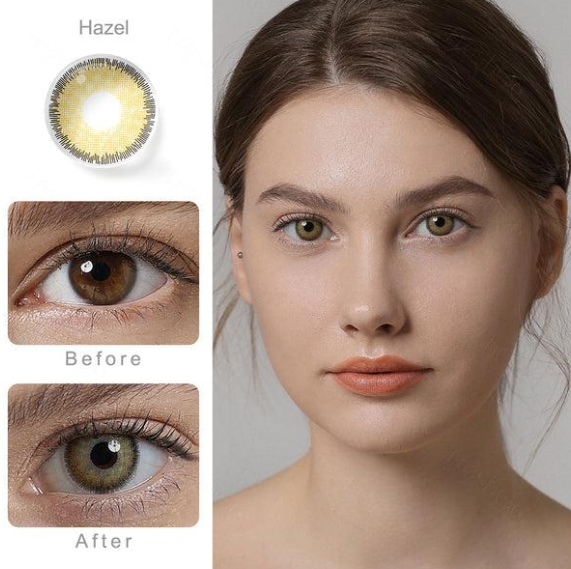
Hazel lenses are dynamic. Their appearance changes depending on the lighting and surroundings.
Appearance in Natural Daylight
In daylight, hazel tones appear brighter and more vibrant. You may notice green or golden highlights. On medium and dark brown eyes, the effect looks like a soft glow rather than a full color change.
This is why hazel contact lenses on brown eyes are often described as naturally enhancing instead of transforming.
How Indoor Lighting Changes Hazel Tones
Indoor lighting softens the effect. Warm lighting brings out amber and brown tones. Cooler lighting can make the green tones more visible. This subtle shift gives hazel lenses a realistic, multi-dimensional look.
Realistic vs Artificial Look: What to Expect
The realism depends on lens design. High-quality lenses use layered pigments and soft edges. These mimic the natural iris pattern. Poorly designed lenses may appear flat or overly opaque.
Hazel lenses, when chosen correctly, are less likely to look artificial compared to more dramatic colors.
Choosing the Right Hazel Shade for Brown Eyes
Selecting the right shade is key to achieving a natural look.
Light Hazel vs Dark Hazel on Brown Eyes
Light hazel lenses contain more green or golden tones. They create a brighter and slightly more noticeable effect.
Dark hazel lenses lean closer to brown. They are ideal for subtle enhancement. They deepen the eyes without changing the overall color too much.
How Lens Opacity Affects the Final Look
Opacity determines how visible the lens color is. If the opacity is too low, the lens may not show on dark brown eyes. If it is too high, the result may look unnatural.
Balanced opacity ensures that hazel contact lenses on brown eyes blend well while still being visible.
Avoiding Unnatural or Flat Hazel Shades
Natural hazel eyes have multiple tones. Avoid lenses that look too yellow or one-dimensional. Choose designs with gradients and slight variations in color. This adds realism.
How Skin Tone and Makeup Affect Hazel Contact Lenses
Hazel lenses do not exist in isolation. Your skin tone and makeup influence how they appear.
How Hazel Lenses Look on Different Skin Tones
On warm skin tones, hazel lenses often appear more golden or amber. This creates a cohesive and glowing look.
On cooler skin tones, the green tones in hazel become more noticeable. This creates contrast while still maintaining a natural feel.
Best Makeup Colors to Enhance Hazel Eyes
Earthy shades work best. Colors like bronze, copper, and soft brown highlight the tones within hazel lenses.
Light eyeliner and neutral shadows help maintain balance. Overly bold makeup can overpower the subtle effect of hazel lenses.
Keeping the Look Natural for Daily Wear
If you usually wear clear contact lenses, switching to hazel lenses is an easy upgrade. You keep the comfort while enhancing your overall appearance.
The key is to keep everything balanced. Soft makeup and natural tones work best for everyday styling.
When to Wear Hazel Contact Lenses for the Best Effect
Hazel lenses are versatile and suitable for many occasions.
Everyday and Office-Friendly Styling
Hazel lenses are subtle enough for daily use. They enhance your eyes without drawing too much attention. This makes them ideal for professional settings.
For regular wear, hazel contact lenses on brown eyes provide a polished and refined look.
Styling Hazel Lenses for Social Events
For events, hazel lenses can be paired with soft glam makeup. The multi-tone effect catches light and adds depth. This makes your eyes stand out naturally.
Day-to-Night Transition Benefits
One of the biggest advantages of hazel lenses is adaptability. They look soft and natural during the day. At night, under artificial lighting, they gain depth and richness.
This makes them a reliable choice for all-day wear.
Conclusion
Hazel contact lenses on brown eyes create a subtle and natural enhancement. They work with your natural eye color instead of covering it. This results in a realistic and flattering appearance.
By choosing the right shade, opacity, and styling, you can achieve a look that feels effortless and authentic. Hazel lenses are a practical choice for both everyday wear and special occasions.
FAQs
Do hazel contact lenses look natural on brown eyes?
Yes. Hazel lenses blend with brown eyes due to their mixed tones. They enhance the natural color rather than replacing it.
Are hazel contact lenses suitable for daily wear?
Yes. Most hazel lenses are designed for comfort and daily use, making them suitable for regular wear.
Which hazel shade works best for dark brown eyes?
Medium to dark hazel shades with balanced opacity work best. They provide visibility while maintaining a natural look.
Do hazel contact lenses look different in photos than in real life?
Yes. Lighting and camera settings can change how the color appears. Hazel lenses may look brighter or more green in photos.
-.png?w=2000&h=1500)