Photography is all about detail. Small elements can completely change the final image. Eye color is one of those elements. It draws attention and adds emotion to a shot.
Contact lenses are widely used in fashion, beauty, and editorial shoots. They help create different moods. They can make a look soft, bold, dramatic, or cinematic. But not every lens color works well on camera.
Lighting, skin tone, makeup, and concept all affect how lenses appear. A color that looks perfect in real life may look flat in photos. This is why choosing the right lens shade is important.
In this guide, we will explore the best contact lens colors for photoshoots. We will also explain how lighting and styling affect the final result. This will help you create more impactful visuals.
Why Contact Lens Color Matters in Photoshoots
Camera lighting can dramatically change how contact lens colors appear in photos.
How studio lights affect eye color visibility
Studio lighting is often strong and direct. It enhances some colors and dulls others. Bright lights can wash out subtle shades. At the same time, they can make bold colors pop.
For example:
- Light lenses may lose depth under harsh lighting
- Opaque lenses retain their visibility better
- Reflective surfaces can create glare on the lens
Photographers often adjust light angles to control this. But the lens choice still plays a key role.
Why some lens colors photograph better than others
Not all colors behave the same on camera. Some shades naturally stand out more.
- High contrast colors appear sharper
- Defined limbal rings improve eye clarity
- Multi-tone designs create depth in close-ups
Flat or overly translucent lenses may look dull. On the other hand, structured designs give a more realistic effect.
Bright Blue Colored Contact Lenses for High-Impact Photos
Bright blue colored contact lenses are one of the most popular choices for photoshoots. They offer strong contrast and visual clarity.
How bright blue colored contact lenses stand out on camera
Blue tones reflect light well. This makes them highly visible in photos. Even from a distance, they draw attention to the eyes.
They work especially well when:
- The subject has dark natural eyes
- The shoot uses neutral backgrounds
- The lighting is clean and directional
Because of this, bright blue colored contact lenses are often used in commercial and beauty photography.
When blue lenses create sharp contrast and clarity
Contrast is important in photography. Blue lenses create a strong difference against warm skin tones. This makes the eyes look sharper.
They also:
- Enhance facial symmetry
- Highlight makeup details
- Improve focus in close-up shots
This is why photographers often choose blue for portraits.
Why bright blue works well for fashion and beauty shoots
Fashion shoots focus on bold visuals. Blue lenses add drama without overpowering the look.
They pair well with:
- Minimal makeup for clean aesthetics
- Metallic or cool-toned styling
- High-fashion editorial themes
Many stylists prefer bright blue colored contact lenses because they consistently perform well under different lighting setups.
Other Contact Lens Colors That Work Well for Photoshoots
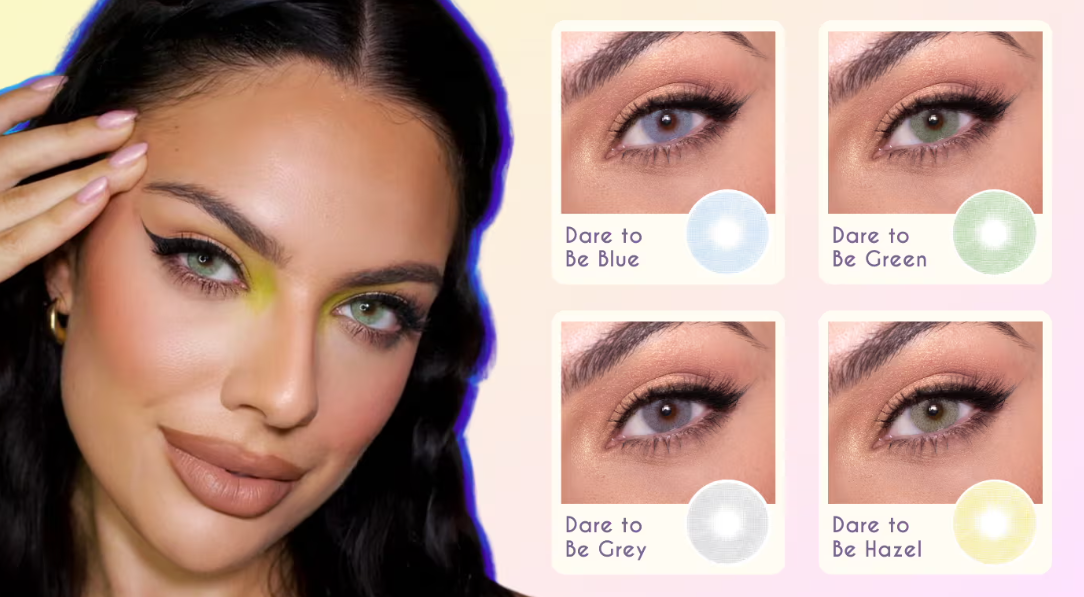
While blue is impactful, other colors also offer strong visual results.
Light grey and ice tones for editorial looks
Grey lenses create a soft yet striking effect. They are often used in editorial photography.
Benefits include:
- Subtle brightness without harsh contrast
- A modern and clean appearance
- Strong performance in black-and-white photography
Ice grey tones also reflect light uniquely.
Green lenses for earthy and cinematic styles
Green lenses give a natural yet noticeable change. They are perfect for outdoor and cinematic shoots.
They work well with:
- Warm lighting
- Nature-inspired themes
- Earth-toned styling
Green adds depth without being too bold.
Hazel tones for soft portrait photography
Hazel lenses are ideal for natural portraits. They enhance the eye without making it look artificial.
They are best for:
- Lifestyle shoots
- Close-up portraits
- Warm color palettes
Hazel tones blend well with most skin tones.
Choosing Contact Lens Colors Based on Lighting and Concept
The shoot concept plays a major role in lens selection.
Studio lighting vs natural outdoor lighting
Different lighting conditions affect colors differently.
Studio lighting:
- Strong and controlled
- Can flatten subtle tones
- Best for bold lens colors
Natural lighting:
- Softer and dynamic
- Enhances natural-looking lenses
- Works well with green, hazel, and grey
Understanding this helps avoid poor color choices.
Matching lens color with makeup and wardrobe
Lenses should complement the full look.
- Cool-toned makeup pairs well with blue and grey
- Warm tones match green and hazel
- Bold outfits need balanced lens shades
Harmony is key in photoshoots.
Avoiding washed-out or overly reflective shades
Some lenses look too shiny under light. This creates unnatural reflections.
To avoid this:
- Choose matte-finish designs
- Avoid overly light shades in strong lighting
- Test lenses before the shoot
Balanced tones give better results.
Tips to Keep Contact Lenses Looking Natural on Camera
Even the best lens color needs proper handling.
Importance of realistic patterns and limbal rings
Lenses with natural patterns look better in close-ups.
- Limbal rings define the iris
- Multi-layered colors add realism
- Avoid flat designs
This is especially important for high-resolution photography.
Choosing the right diameter for close-up shots
Lens diameter affects how the eyes look.
- Larger diameters create a doll-like effect
- Smaller diameters look more natural
For professional shoots, natural proportions are usually preferred.
Preventing dryness and glare during long shoots
Long sessions can cause dryness. This affects how lenses appear.
Tips:
- Use lubricating eye drops
- Take short breaks
- Blink regularly between shots
Dry lenses can reflect light unevenly.
Many professionals using Akiwaii lenses prefer to test comfort before long sessions. This helps maintain consistency in photos.
Conclusion
The best contact lens colors for photoshoots depend on lighting, styling, and creative intent.
Bright and bold shades, such as bright blue colored contact lenses, work well for high-impact visuals. Softer tones like grey, green, and hazel create more natural results.
Choosing the right lens is not just about color. It is about how that color interacts with light, makeup, and the overall concept.
A well-chosen lens can elevate a photoshoot. It enhances the subject without overpowering the image.
FAQs
Do bright blue colored contact lenses look good in studio lighting?
Yes. They perform very well under studio lighting. Their high contrast makes them stand out clearly.
Which contact lens colors photograph the most naturally?
Hazel, green, and soft grey lenses usually look the most natural in photos.
Are colored contact lenses suitable for long photo shoots?
Yes, but comfort is important. Proper hydration and breaks help maintain eye health.
Do contact lenses look different on camera than in real life?
Yes. Lighting and camera settings can change how colors appear. Testing lenses before the shoot is recommended.